
Canada’s Environmental Innovation Stage Returns in 2027
ECO IMPACT 2027 is inviting innovators, researchers, employers, startups and organizations to showcase practical solutions shaping the future of Canada’s environmental workforce and green economy.
Ten minutes. One stage. A national audience, in the room and online.
Applying is free. Submitting your idea costs nothing. If you’re selected to present, you’ll just need an ECO IMPACT 2027 event pass, or to be an event sponsor, to take the stage.
This isn’t just another presentation
It’s where new ideas get noticed
The Innovation Stage brings together fresh thinking, real-world solutions and the people making things happen across Canada’s environmental sector. In fast-paced, 10-minute presentations, innovators showcase their work, spark conversations and put new possibilities in front of the people who can help move them forward.
01
Your idea
02
What makes it different
03
Why it matters
Your idea,
streamed
nationally
Every Innovation Stage presentation will be livestreamed, so your idea reaches well beyond the room. Employers, partners, researchers and students across Canada can tune in.
Recordings will be shared after the event, so you’ll have something to post and share long after your 10 minutes are up.
Who’s watching
The Innovation Stage connects the people building a sustainable future with the audiences that can help them grow.
Industry and investors
Looking for new partnerships and opportunities.
Government and academia
Seeking solutions to climate and workforce challenges.
Professionals and students
What does innovation look like?
That’s up to you
We want ideas from every corner of the environmental sector.
Here are a few to get you thinking.
01
Tech that does more
AI, automation, sensors, robotics, digital platforms, environmental monitoring and data tools that help us work smarter.
02
The circular economy in action
Waste diversion, material traceability, reuse, recycling, resource recovery and better ways to make the most of what we already have.
03
Solutions for land, water & wildlife
Waste diversion, material traceability, reuse, recycling, resource recovery and better ways to make the most of what we already have.
04
Rethinking how industry works
Better processes, cleaner operations, practical efficiency gains, environmental management and new approaches to long-standing challenges.
05
People, skills & the future of work
New approaches to training, workforce development, recruitment, professional practice and building the environmental talent Canada needs.
06
Big ideas. New models. Unexpected connections.
Research breakthroughs, emerging businesses, innovative partnerships, new products and ideas that don’t fit neatly into a box.
Don’t see your innovation listed? Good. Surprise us.
We care about what you’re doing, why it matters and what others can learn from it, not whether it fits a category.
Who should take the stage?
If you’re doing innovative work in the environmental sector, there’s a place for you here.
- You don’t need to be a household name.
- You don’t need venture backing.
- And you definitely don’t need all the answers.
If you’ve learned, built, tested or reimagined something that could benefit the environmental sector, we want to hear from you.
We’re inviting
- Entrepreneurs and startups developing new solutions
- Companies and industry teams improving how environmental work gets done
- Researchers, academics and students with ideas worth sharing
- Environmental consultants and practitioners finding better ways to solve problems
- Technology developers and clean-tech innovators
- Indigenous-led organizations and community innovators advancing practical solutions
- Educators, workforce specialists and organizations rethinking environmental skills and training
- Established organizations testing new approaches, products, partnerships or business models
Want to be part of the Innovation Stage?
Get your idea in front of the ECO IMPACT community, in person and on the livestream.
Eligibility
To be eligible, Innovation Stage presenters must purchase a ticket to ECO IMPACT 2027 or take part as an event sponsor.
Day 1 — February 19, 2026


1:32 PM to 1:37 PM
A Word From Our Innovation Stage Partners


1:37 PM to 1:40 PM
Introduction to the Innovation Stage

Water, Watersheds & Climate Resilience Innovation
1:42 PM to 1:52 PM
20 Years of Innovations, The Rise of Physical AI for The Environment
Read the Description
This talk will celebrate over 20 years of innovations in environmental technologies and introduces the role of Physical AI in advancing sustainability. It demonstrates how integrating AI with hardware can improve soil sensing, automate water treatment, boost efficiency, enable energy reduction, and facilitate smarter environmental solutions, shaping a more sustainable future through technology and collaboration.

1:54 PM to 2:04 PM
Re-Oxygenating Canada’s Lakes: Engineering Solutions for Eutrophication
Read the Description
Canada’s lakes are increasingly affected by eutrophication driven by nutrient loading, warming, and declining dissolved oxygen. This presentation outlines an engineering-based approach to lake restoration that focuses on restoring oxygen and understanding how oxygen dynamics, sediment chemistry, and internal nutrient cycling interact within each lake system. Drawing on work at Swan Lake, Elk Lake, and Quamichan Lake, the session highlights how dissolved oxygen profiling and sediment assessments are informing site-specific restoration decisions. The talk focuses on how this systems-based approach can support municipalities and stewardship groups in planning effective, long-term lake restoration.

2:06 PM to 2:16 PM
Physically Removing Excess Phosphorus From Our Lakes and Rivers
Read the Description
Building a business as an entrepreneur is difficult and challenging despite all the fanfare requiring grit and dedication. Join me as I share more about the journey of building Lakewater Nutrient Capture from a simple concept to securing our first customers. At Lakewater Nutrient Capture, we are building a service that provides communities the ability to quickly implement and directly remove excess phosphorus from their lakes and rivers. We provide an effective alternative to replace traditional treatments, using nano iron-oxyhydroxide filled filters. A simple and elegant solution that is similar to filtering the air in your home with an induct air filter but on a much larger scale.

2:18 PM to 2:28 PM
From Insight to Action: Resources for Communities Building Climate-Ready Housing and Infrastructure
Read the Description
Initially launched in October 2024, ClimateInsight.ca has quickly become the go-to destination for relevant, actionable information and resources for communities to build low-carbon, resilient housing and infrastructure. Discover the suite of free, online features designed to help set priorities, review relevant solutions, and understand impacts. Dive into a rapid risk assessment tool and a first-of-its-kind map that layers socio-economic data, climate data, and key infrastructure, providing a snapshot of existing vulnerabilities in your community. Join Project Director Sheri Young of ICLEI Canada on the Innovation Stage at ECO IMPACT 2026 to meet your new community climate specialist, ClimateInsight.ca.

Building Low‑Carbon Systems: Infrastructure, Materials & Community Impact
2:30 PM to 2:40 PM
Harvesting Thermal Energy from Wastewater: From Buildings to District Networks
Read the Description
As urban centres accelerate toward low carbon goals, one of the most significant thermal resources remains hidden in our sewer infrastructure. This session explores how innovation in Wastewater Energy Transfer (WET) technology has unlocked wastewater as a primary source for modern energy networks, particularly in regions like Alberta where extreme temperature fluctuations challenge traditional systems.Brett Stewart of SHARC Energy provides an overview of scalable heat recovery systems—from compact units for multi-family buildings to industrial systems at the centre of North America’s largest District Thermal Energy Networks. Using case studies from flagship projects like leləm̓ Village and the False Creek Neighbourhood Energy Utility, this presentation illustrates how design innovation has transformed wastewater into a reliable renewable energy asset that balances environmental impact with economic viability


2:42 PM to 2:52 PM
Democratizing Sustainable Investing: How Everyone Can Be an Investor in Change
Read the Description
Discover how your dollars can help fund the future of a more equitable and sustainable Canada. In this session, Blake Bunting, Co-founder of Goparity Canada, explores how finance can shift from exclusion to empowerment. Traditional financial systems have long been detached from purpose, leaving community projects that could truly drive local sustainability to struggle for funding.
Blake presents a compelling vision of democratized impact investing, where anyone, regardless of wealth or background, can align their money with their values and invest directly in the change they want to see. Through a case study of renewable energy development for Indigenous communities on Vancouver Island, Blake illustrates how collective investment can create environmental, social, and economic value simultaneously. The session invites professionals, students, and changemakers alike to see finance not as a system to challenge from the outside, but as a tool to rebuild from within.

2:54 PM to 3:04 PM
The Foothills Salvage and Recycling Society – A Public/Non-Profit Success Story
Read the Description
The presentation shows the history of the how the partnership developed and the benefits to the community today through employment, work opportunities for volunteers and people with special needs, and the amount waste that can be diverted from landfill and money that can be generated from “waste”.


3:06 PM to 3:16 PM
Molecules to lifeforms: Our experiences developing an eDNA research using nanotechnology
Read the Description
Canada is embarking on billions of dollars of infrastructure spending, much of which will occur in natural areas. To conserve biodiversity, assessments are needed to identify plants and animals in these areas. Traditional field techniques are time consuming, resource intensive and sometimes hazardous. Environmental DNA (eDNA) is an emerging, complementary approach that detects DNA shed into environmental media such as air and water. Over the past year our lab has developed expertise in field sampling, lab analysis and bioinformatics. Nanotechnology is an important tool in our lab sequencing processes. This presentation will focus on our current projects which include amphibian detections in water, mammal detections in snow tracks and air as well as multiple student pilot projects to detect invasive species.


3:18 PM to 3:28 PM
Ecognos – an Intelligent System For Environmental Risk Assessments
Read the Description
This session will present a novel methodology for AI-enabled nature risk assessment that aligns with the TNFD’s Disclosure, Impact, Risk, and Opportunities (DIRO) framework. It integrates an ontology-aligned evidence base, geo-spatial context, sector environmental impact pathways, and a knowledge graph to characterize and quantify environmental risk at the corporate and asset levels.
The approach addresses a major gap in current practice: conventional assessments struggle to connect heterogeneous environmental data, causal impact pathways, and unstructured data buried in documents to yield decision-ready insights at scale. By combining semantic ontologies with spatial datasets and graph-powered reasoning, this session will demonstrate how AI can systematically uncover, quantify, and visualize nature dependencies and impacts.
Participants will gain a clear understanding of how to integrate AI into robust, evidence-based nature risk assessments into your practice that align with project finance requirements and global sustainability reporting frameworks. This session is designed for environmental consultants, sustainability practitioners, and policymakers seeking tools to enhance decision quality around biodiversity and ecosystem dependencies.

Land, Agriculture & Clean Technology Solutions

3:30 PM to 3:40 PM
Climate Solutions Rooted in Rural Alberta
Read the Description
The presentation will explore how putting community members at the Centre can advance climate solutions in Alberta, drawing on Rural Routes to Climate Solutions’ (RR2CS) two flagship initiatives: the Regenerative Agriculture Lab (RAL) and the Siksikaitsitapi Agriculture Project (SAP). Across these two projects, RR2CS works collaboratively with producers, Indigenous knowledge holders and rural community members to build climate solutions that are tailored to their local challenges and geographical context.
By working with participant groups from the communities we serve, RR2CS projects empower people with lived experience on the land to be in the driving seat when it comes to creation, trialing and scaling of climate solutions. Not only does this help to build trust with communities, but it also builds local partnerships, skills and leadership in this space—positioning rural and Indigenous communities not as passive recipients of climate policy, but as knowledgeable leaders in climate adaptation and mitigation.
3:42 PM to 3:52 PM
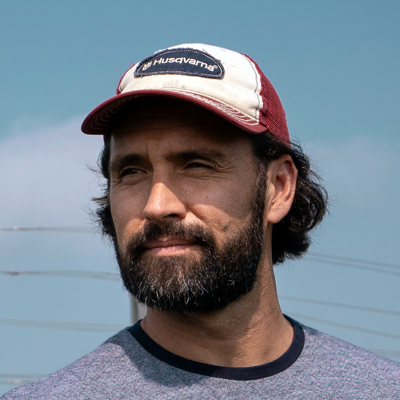
AgriPhoton: Advanced Photonic Technology for Sustainable Greenhouse Agriculture
Read the Description
AgriPhoton is a clean technology startup and University of Calgary spin-off transforming how greenhouse and controlled-environment agriculture use natural sunlight. We develop advanced photonic coatings and films that optimize light utilization by converting underused wavelengths of sunlight into photosynthetically active radiation (PAR), the spectrum plants use most efficiently for growth. This increases light quality inside greenhouse structures without added energy, infrastructure, or operational complexity.
Traditional shading paints and coverings reduce heat by blocking sunlight, which also limits crop productivity and increases reliance on energy-intensive lighting and climate controls. In contrast, AgriPhoton’s solution enhances usable light while supporting thermal management, delivering measurable improvements in yield, crop uniformity, and production speed. Early trials demonstrate up to 15–20% yield gains, faster crop cycles, and reduced operating costs—creating a compelling return on investment for growers.
Our technology is affordable, compatible with existing greenhouse materials, and designed for multi-season durability. By enabling growers to produce more food with the same land and less energy, AgriPhoton supports climate-resilient, sustainable agriculture while driving economic value in the rapidly growing greenhouse sector.


3:54 PM to 4:04 PM
AI-Enriched EHS — Leveraging Regulatory AI to Simplify EHS Compliance
Read the Description
Environmental regulations are complex and often overwhelming—but what if AI could make compliance clear and actionable? In this session, Nimonik will demonstrate how their innovative regulatory AI tools help environmental professionals identify relevant requirements, summarize complex clauses, and highlight applicable obligations for specific facilities or operations.Instead of navigating dense legal language, teams can quickly see what applies, what doesn’t, and why—ensuring transparency and confidence in compliance decisions. Join us for an interactive demonstration where we’ll show real examples of how AI simplifies regulatory understanding and even suggests relevant actions to take.


4:06 PM to 4:16 PM
Traceability in action with WiQ: Where products and waste find their right place
Read the Description
WiQ is a software platform that digitizes and automates traceability across products and waste streams. It captures and connects data in real time to track materials from origin to final destination, replacing manual, fragmented processes with a single, automated system. By making traceability actionable, WiQ ensures products and waste are correctly identified, handled, and routed to the right place, supporting regulatory compliance, operational efficiency, and environmentally responsible material management.

4:18 PM to 4:28 PM
From Wood Waste to Nylon 66: How OzoneBio Eliminates N₂O from a $50B Market
Read the Description
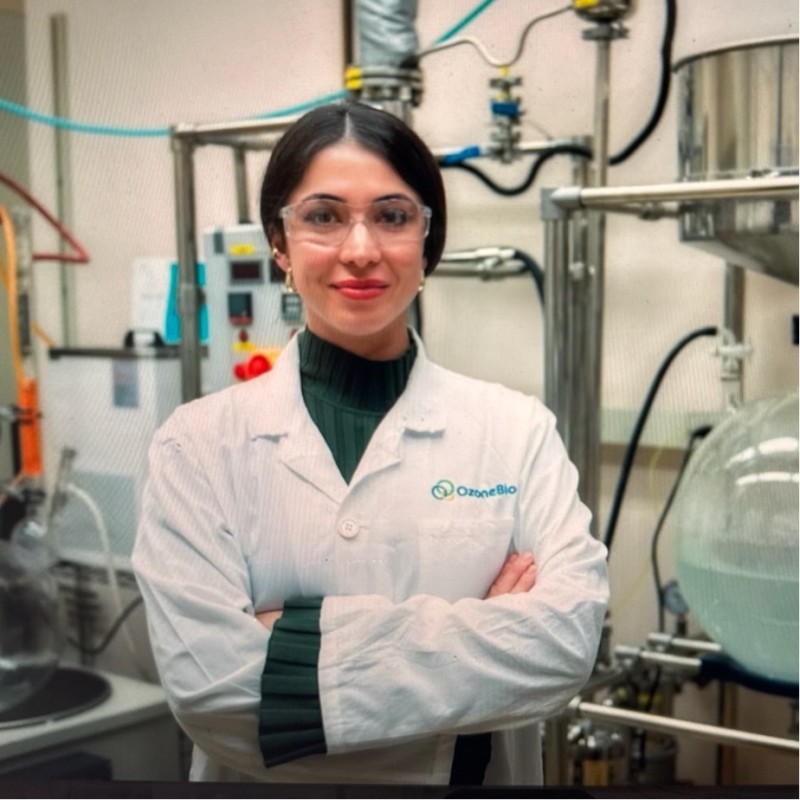
OzoneBio is a Calgary-based cleantech company developing Bio-Adipic Acid (BioAA) — a chemically identical, drop-in replacement for conventional adipic acid produced without nitrous oxide (N₂O) emissions, one of the most powerful greenhouse gases.Adipic acid is a core input for Nylon 66, used across automotive, textiles, electronics, and industrial applications. Existing petroleum-based and bio-based routes have struggled with emissions, yield, cost, or polymer performance. OzoneBio’s proprietary oxygen-driven process enables BioAA production with up to 96% CO₂e reduction, while meeting the purity and performance requirements of Nylon 66.This presentation will cover why adipic acid is a hidden climate problem, how OzoneBio’s BioAA overcomes past bio-chemical failures and how this innovation enables scalable, low-carbon materials manufacturing, positioning Alberta as a leader in sustainable chemicals.
Day 2 — February 20, 2026
Environmental Data, AI, & Compliance Intelligence

8:32 AM to 8:42 AM
Discover AI Opportunities in the Environmental Sector
Read the Description
Artificial intelligence is reshaping the environmental workforce—and the opportunities are bigger than ever. Join us for an introduction to ECO Canada’s new AI Opportunity Scanner, a fast, free tool designed to help environmental professionals and employers uncover how AI can transform their work, unlock funding, and accelerate sustainability goals. In this session, you will explore how the AI Opportunity Scanner provides:
Personalized AI recommendations tailored to your role, organization, and sector
Funding opportunities to help you adopt AI responsibly and affordably
Mapped upskilling pathways to build confidence and future‑ready skills
Industry‑specific insights highlighting where AI is making the biggest impact across environmental fields
Participants will also see how the scanner delivers results in just 60 seconds, with no login required—making it one of the simplest ways to understand your AI readiness and identify next steps.
Whether you’re curious about getting started with AI or looking to scale your impact, this session will help you confidently navigate the future of environmental work.


8:44 AM to 8:54 AM
Crunching Numbers, Not Nerves: Making Stats Courtroom-Friendly
Read the Description
Environmental forensic investigations often rely on large, complex chemical datasets that are difficult to interpret and even harder to explain clearly in a courtroom setting. Rather than evaluating individual chemical measurements in isolation, a multivariate statistical tool (Mike-MAP) allows these datasets to be reduced into simple visual representations that highlight meaningful patterns in the data. In this presentation, I demonstrate how multiple chemical measurements can be condensed into a single, intuitive figure that shows which samples are chemically similar and which are distinct, allowing experts to clearly communicate evidence related to source attribution and environmental impacts.The presentation emphasizes the importance of data exploration and transparency when applying statistical methods, particularly in legal contexts where different analytical approaches can produce different visual outcomes from the same dataset. By applying and comparing multiple dimensionality reduction techniques and evaluating the consistency and quality of the resulting patterns, this approach reduces the risk of over-interpretation and expert disagreement.Ultimately, this talk focuses on how complex chemical data can be responsibly simplified into defensible, easy-to-understand visuals that support clear expert testimony while explicitly acknowledging uncertainty. The goal is not to replace expert judgment with statistics, but to use statistics as a tool for clear, transparent communication of scientific evidence.

8:56 AM to 9:06 AM
Real-time Metals Detection for Process Control and Environmental Impact Reduction
Read the Description
2S Water’s sensor technology, which provides automated, real-time detection and quantification of metals in water, is designed to reduce the impact of the mining indsutry on water sources while reducing operational costs for users. This innovation replaces traditional grab-sample methods, enabling immediate process feedback, improved regulatory compliance, and significant reductions in freshwater use and operational costs.
9:08 AM to 9:18 AM
Conformii: From Regulation to Action
Read the Description
Conformii is an advanced regulatory compliance process management platform designed specifically for energy, mining and utilities organizations. It simplifies continuous compliance by digitizing and centralizing regulatory documents and frameworks, enabling stakeholders to collaborate seamlessly through a real‑time, repeatable workflow and intuitive dashboard. The solution supports traditional reporting and emerging sustainability standards while automating the monitoring of controls. Its modular design includes a comprehensive library of legislated documents, a “Briefcase” legal registry, conditions and commitments tools for ESG obligations, calendaring for critical deadlines, and flexible reporting capabilities. The presentation and live demonstration will provide a concise overview of this innovation and then walk through a typical compliance use case. Attendees will see how Conformii digitizes regulatory content, standardizes workflows, and streamlines collaboration by linking regulations to internal controls. The demo will showcase automated notifications, task management, integrated ESG reporting and real‑time dashboards that highlight risk status and readiness for audits.



9:20 AM to 9:30 AM
Lost to Found: AI and the Future of Work
Read the Description
The ECO Canada Job Board, powered by Acuspire, is Canada’s largest dedicated environmental employment platform—connecting thousands of job seekers and employers across the country. This session introduces attendees to the AI‑enhanced job‑matching technology behind the board and demonstrates how both candidates and hiring managers can use it to accelerate career and recruitment success. Participants will discover how the platform leverages Acuspire’s advanced AI engine to instantly match talent with opportunities, streamline hiring workflows, and reduce time‑to‑hire. With more than 2,000 active job postings and 30,000 uploaded resumes at any time, the job board serves as a high‑impact tool for discovering skilled environmental professionals. Employers benefit from faster candidate matching, resume access with no extra cost, and simplified job posting, while job seekers enjoy free resume uploads, targeted job alerts, and personalized recommendations. Whether you’re seeking emerging professionals or senior environmental leaders, this session shows how the ECO Canada + Acuspire partnership transforms the way Canada’s environmental workforce connects, grows, and thrives

Circular Economy, Community Innovation & Environmental Education

10:02 AM to 10:12 AM
Designing Recognition Sustainably: Low-Carbon Awards That Tell a Story
Read the Description
Corporate recognition shouldn’t come wrapped in unnecessary emissions from production and logistics. CarbonStone Designs seeks to demonstrate how we can replace conventional trophies with custom pieces made from carbon abated concrete blends, recycled aggregates, and localized production chains, produced through a hybrid process of 3D modeling, 3D printing, silicone molding, and small batch casting. We’ll share practical ways event and procurement teams can align awards with ESG goals—cutting embodied carbon, localizing supply chains, and improving end of life circularity—without sacrificing design or budget, and we’ll share our mission to spread the awareness of low-carbon concrete through our operations.



10:14 AM to 10:24 AM
Embedding Community Outcomes: Integrated Models for Purpose-Driven, Actionable Community Transformation
Read the Description
This talk introduces a practical framework for embedding environmental sustainability, workforce development, and community resilience directly into the day-to-day operations of large industrial facilities. Rather than treating ESG, volunteering, and workforce initiatives as parallel programs, the model reframes community impact as an operational outcome—governed with the same discipline applied to safety, quality, and flow. Drawing from logistics, circular economy design, and workforce pathway development, the session explores how reliable, repeatable community value can be produced without compromising operational performance. The approach is intentionally scalable, auditable, and transferable, offering insights relevant across industries and sectors.

10:26 AM to 10:36 AM
Becoming an Eco Steward
Read the Description
Navigating the environmental workforce and remaining curious early in your career is challenging. The Youth Eco-Stewards program offers an array of opportunities for youth to learn new skills, engage with their communities, and network amongst likeminded peers. This presentation will highlight how our program supports skill development and reduces barriers in entering the environmental workforce.


10:38 AM to 10:48 AM
MFC Games: Creating Electricity from the Ground
Read the Description
MFC Games will showcase its hands‑on, game‑based learning approach by walking audiences through a sample lesson designed for students. The presentation will then highlight the program’s real‑world impacts to date, including how learners are developing practical skills and systems thinking. MFC Games will also share how the program is evolving—reflecting on lessons learned, early outcomes, and the next steps in expanding and strengthening the learning experience.


10:50 AM to 11:00 AM
Introducing JADA:
An AI-Powered Talent Solution
Read the Description
This session will spotlight the collaboration between the University of Waterloo and ECO Canada in creating JADA, an interactive AI tool for students. This partnership offers significant value to ECO Canada members by allowing them to showcase their co-op job opportunities to UWaterloo students. In turn, students benefit by gaining access to quality employment opportunities and professional development through a trusted industry association.

Future Energy Systems & Canada’s Sustainability Workforce
11:17 AM to 11:27 AM
Rebuilding from First Principles: A Practical Model for Climate and Workforce Innovation
Read the Description
Rebuilding from First Principles presents a practical, systems-level approach to climate and workforce innovation. Challenging fragmented, high-cost models, it explores how education, infrastructure, and governance can be redesigned as integrated, real-world systems. By combining hands-on learning, reinvestment, and evidence-driven experimentation, the model demonstrates how capability can compound over time—delivering lower costs, stronger talent pipelines, and scalable climate solutions grounded in practice, not theory.

11:29 AM to 11:39 AM
Energy Navigator: Clear Paths to Residential Energy Code Compliance
Read the Description
As residential energy codes move toward higher tiers, builders and municipalities are being asked to manage more complex compliance using workflows that were built for checklist-style codes, not today’s energy requirements. Energy Navigator is a digital tool that translates energy code requirements into clear, buildable decisions for builders, energy advisors, and permitting offices. This presentation shows how a shared workflow can reduce rework, improve submission quality, and support faster, more consistent reviews, while also giving municipalities access to structured housing and energy data that supports planning and decision-making across rural and urban jurisdictions.

11:41 AM to 11:51 AM
Read the Description
Off-grid natural gas sites increasingly rely on electrically operated equipment as regulations push operators away from venting natural gas to operate pneumatic devices. Today, that power is typically provided by reliable but low-efficiency and costly fuel combustion, sometimes incorporating over-sized solar-battery packages to reduce operating costs and emissions during periods of sufficient sunlight. While valuable gas pressure drops already exist at many sites, converting them into reliable electricity is deceptively difficult. Available differential pressures span a wide range and change over time, flow is often limited, and freezing risk can dominate at higher pressure drops. This presentation explains why pressure-to-power approaches struggle and how Spherical Rotors is progressively de-risking these challenges before deployment at committed pilot sites.


11:53 AM to 12:03 PM
Waste to Wealth: Transforming Plastic Waste into Hydrogen and Carbon Nanotubes
Read the Description
This session introduces ECCC’s innovative, low-CAPEX, locally deployable process that converts plastic waste into two high-value products: clean hydrogen (H₂) and carbon nanotubes (CNT). By addressing plastic pollution while producing advanced energy and materials, this technology offers a practical pathway toward circular economy solutions and sustainable industrial impact.
12:05 AM to 12:15 PM
RiggerTalk Energy Services Directory
Read the Description
The RiggerTalk Energy Services Directory strengthens the environmental and energy sector by making it faster and easier to connect the right service providers with the right projects. Using an innovative, map-based search system, RiggerTalk allows buyers and sellers to find energy and environmental service companies worldwide through targeted keyword and category searches displayed on a global map.
By reducing search time, improving visibility for specialized providers, and encouraging more efficient project matchmaking, the platform supports smarter decision making, reduced operational delays and more sustainable project execution. This session demonstrates how improved access to qualified services can lower logistical inefficiencies, minimize unnecessary travel and resource waste, and accelerate the deployment of environmental, renewable, and energy-focused solutions across the industry.

Why Present on the Innovation Stage
High Visibility and Impact
Reach industry leaders, policymakers, and potential partners while gaining exposure through ECO IMPACT’s national marketing and event channels.
Showcase Your Solution
Share your innovation, technology, or research on stage and connect with organizations and investors who can help bring it to scale.
Where Ideas Meet Action
The Innovation Stage is part of ECO IMPACT’s mission to empower environmental innovation and prepare Canada’s workforce for a sustainable future.
We are seeking innovators working in:
Applications are also welcome from provincial or national organizations whose work supports Alberta’s environmental sector.
